NFL Prop Bets UK: Licensed Sites and Odds Formats
 Available in US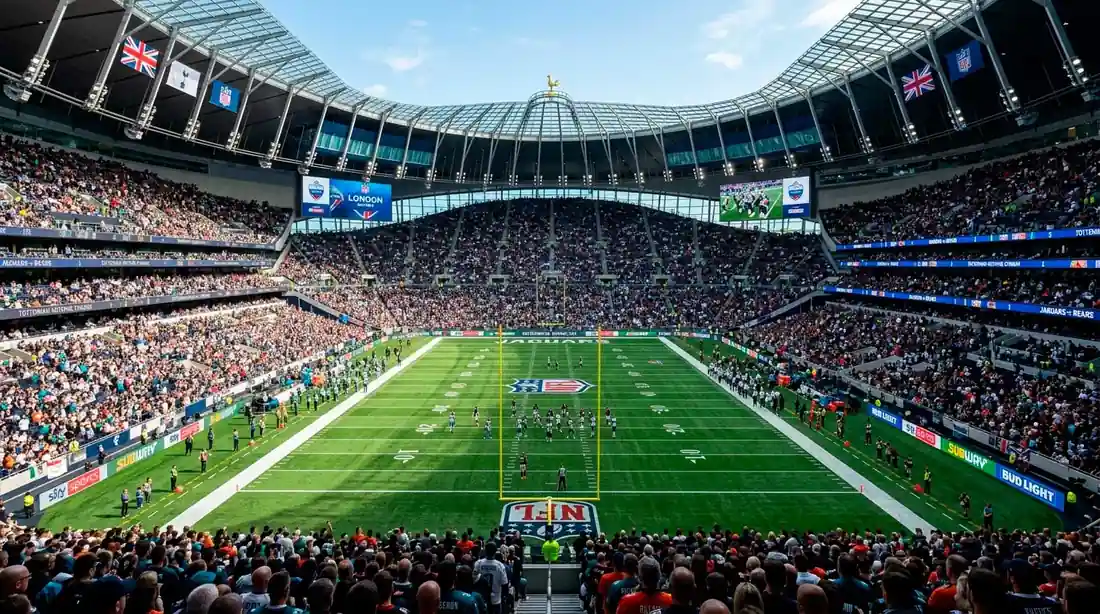
Table of Contents
- UK NFL Prop Markets: Consumer Protection and Regulated Betting
- Fractional, Decimal, and American: Reading NFL Odds as a UK Bettor
- How UKGC Regulation Shapes Your NFL Prop Experience
- Managing NFL Kickoff Times from the UK
- Which NFL Prop Markets Are Available at UK Sportsbooks
- US vs UK Betting Terminology: A Quick Reference
- Frequently Asked Questions
UK NFL Prop Markets: Consumer Protection and Regulated Betting
When I started betting NFL props from the UK in 2019, I assumed I was at a disadvantage compared to American bettors. They had more sportsbooks, more content, and a cultural familiarity with American football that I was still building. What I discovered, gradually and then emphatically, was the opposite. UK punters operate in one of the most tightly regulated betting environments in the world, with consumer protections that American bettors in most states can only envy.
The UK Gambling Commission oversees every licensed operator in this market. The total gross gambling yield for remote casino, betting, and bingo in the UK reached 7.8 billion pounds in the year to March 2025 — a 13.1% increase year-on-year — which reflects both the scale of the market and the regulatory infrastructure that governs it. With an average of 13.5 million active online gambling accounts per month, the UK market is mature, liquid, and fiercely competitive among operators, which ultimately benefits the punter through better odds, more market variety, and stronger safeguards.
Around 12% of UK adults had placed a bet in the four weeks prior to the Gambling Commission’s latest survey — a participation rate that puts betting on par with scratch cards as the most popular form of gambling after lotteries. NFL prop markets are a subset of that broader landscape, but they are growing fast, driven by the league’s expanding UK presence and the increasing sophistication of the prop betting audience.
This guide covers the practical realities of betting NFL props from the UK: how to read the odds formats you will encounter, what UKGC regulation means for your betting experience, how to manage the logistical challenge of late kickoff times, and which prop markets are available at UK-facing sportsbooks. It is the guide I wish I had found when I started.
Fractional, Decimal, and American: Reading NFL Odds as a UK Bettor
The first time I tried to compare an NFL prop line from a UK sportsbook with one from an American-facing site, I spent ten minutes staring at two numbers that looked nothing alike but represented the same price. Fractional, decimal, and American odds all express the same underlying probability — they just do it in formats that feel designed to confuse anyone crossing between markets.
Fractional odds are the UK default. If a player is priced at 7/4 to score anytime, that means a four-pound stake returns seven pounds in profit plus the original four-pound stake — eleven pounds total. The fraction tells you the profit relative to the stake: numerator is profit, denominator is stake. Calculating implied probability from fractional odds: divide the denominator by the sum of numerator and denominator. For 7/4: 4 / (7 + 4) = 0.364, or 36.4%.
Decimal odds are the format I recommend for analytical work. The same 7/4 price in decimal is 2.75. Multiply your stake by the decimal to get the total return: a four-pound bet at 2.75 returns eleven pounds. Implied probability is even simpler: 1 / 2.75 = 0.364. Decimal odds make quick mental comparisons between operators faster because the numbers are easier to rank — 2.75 is immediately recognisable as a better price than 2.60 without any fraction arithmetic.
American odds appear on US-facing content and occasionally on UK sportsbooks that serve both markets. A positive American number — say +175 — means a 100-unit stake returns 175 units in profit. A negative number — say -130 — means you need to stake 130 units to win 100 units in profit. For implied probability: positive odds use 100 / (odds + 100), so +175 becomes 100 / 275 = 0.364. Negative odds use |odds| / (|odds| + 100), so -130 becomes 130 / 230 = 0.565.
Every UK sportsbook allows you to switch between formats in your account settings. I keep mine on decimal by default and only switch to fractional when speaking with other UK punters who prefer that format. The analytical advantage of decimal is small but real — over a season of comparing hundreds of lines across multiple operators, the cleaner arithmetic saves time and reduces errors.
One critical point for UK punters reading American prop content: when an American guide says “the odds are -150,” that translates to roughly 1.67 decimal or 4/6 fractional. The negative sign does not mean anything negative about the bet — it simply indicates that the player is favoured to score. Familiarity with all three formats prevents you from misreading US-sourced analysis, which makes up the majority of available NFL prop content online.
How UKGC Regulation Shapes Your NFL Prop Experience
I have bet NFL props in the UK for seven years, and the regulatory environment has shaped my experience in ways I did not appreciate until I understood what bettors in less regulated markets deal with. The UK Gambling Commission is not perfect, but it provides a baseline of consumer protection that is genuinely meaningful.
The UKGC requires every licensed operator to segregate player funds, which means your deposited money is held separately from the operator’s operating capital. If a sportsbook goes bankrupt — and some have — your balance is protected. The total GGY of the UK gambling industry reached 16.8 billion pounds in the year to March 2025, a 7.3% increase, and the scale of that market supports a regulatory apparatus with real enforcement teeth.
Bill Miller, president of the American Gaming Association, has spoken extensively about the importance of regulated markets, arguing that legal, regulated sports betting delivers consumer protections alongside economic benefits. The UK has operated under this principle for far longer than the US, where legalisation has only expanded since 2018. UK punters benefit from mandatory responsible gambling tools — deposit limits, self-exclusion registers, cooling-off periods — that are standardised across all UKGC-licensed operators. These are not optional features buried in account settings; operators are required to offer them prominently.
For NFL prop betting specifically, UKGC regulation means that the odds you see are the odds you get. Price changes after bet placement are not permitted — once your bet is confirmed, the odds are locked. Settlement follows clearly defined rules published in each operator’s terms and conditions, and disputes can be escalated to an independent alternative dispute resolution service. These protections might sound bureaucratic, but they eliminate the kinds of sharp-practice issues that occasionally surface in less regulated markets: retroactive odds adjustments, disputed settlements, and unannounced market rule changes.
The regulatory environment also means that UK operators compete aggressively on product quality rather than on regulatory arbitrage. The result is a market where NFL prop coverage is deep, odds are competitive, and the range of available markets — anytime TD, first TD, multi-TD, half-specific TD, and more — rivals what is available on any US-facing sportsbook.
There is a broader integrity dimension worth noting. The NFL itself issued a memo to all 32 clubs in November 2025, signalling its intent to work with legislators and regulators to restrict or ban certain prop bets that pose integrity risks. In the UK, the Gambling Commission already has frameworks in place for monitoring unusual betting patterns, and UKGC-licensed operators are required to report suspicious activity. For the UK punter, this means the prop markets you are betting on are subject to layers of oversight that reduce — though cannot eliminate — the risk of match-fixing or insider-driven manipulation. It is not a guarantee of a clean market, but it is a meaningful structural advantage over unregulated alternatives.
Managing NFL Kickoff Times from the UK
The logistical reality of betting NFL from the UK is that most games kick off late in the evening by British time. The early Sunday slate starts at 18:00 GMT (17:00 during British Summer Time), the late afternoon games kick off at 21:05 or 21:25, and Sunday Night Football does not start until 01:20 Monday morning. Monday Night Football follows the same pattern. Thursday Night Football is slightly more manageable at 01:15 Friday morning, but it is still a late night.
I have developed habits around this schedule that make it sustainable over a full 18-week season. The early kickoffs at 18:00 are the most UK-friendly window — four or five games running simultaneously, with results typically settled by 21:00 to 21:30. I do the bulk of my betting on this window. The late afternoon games, starting around 21:25, are manageable if you do not mind a late Sunday night. Primetime games — Sunday Night and Monday Night Football — I approach differently: I place my bets in advance and check results the following morning rather than staying up past midnight to watch them live.
The schedule creates a practical constraint on live betting. In-play TD props require you to be watching the game, and staying awake through multiple kickoff windows is not sustainable week after week. I concentrate my live betting activity on the 18:00 window and treat everything after 21:00 as pre-game only. This discipline prevents fatigue-driven mistakes — the kind of impulsive live bet you place at 23:30 because you are tired and chasing a result.
The NFL has steadily expanded its international schedule, with seven overseas regular-season games in the 2025 season — a league record — including three in London. Over six million viewers watched the London games across television and online platforms. These games kick off at UK-friendly times, typically 14:30 or 18:00 on Sundays, which makes them the most accessible NFL betting windows for UK-based punters.
NFL London Games: The Live Betting Opportunity on Your Doorstep
The NFL has hosted games in London since 2007, welcoming over three million fans to the city’s stadiums across that span. The economic impact of major sporting events on London reached 230 million pounds in 2024 alone, with NFL London Games and MLB London Series contributing a combined US television audience exceeding 20 million viewers. For UK-based NFL prop bettors, these games represent a unique convergence: familiar kickoff times, accessible venues for those who want to attend live, and a growing pool of UK-specific analysis and commentary.
From a prop betting perspective, London Games carry their own analytical quirks. Travel fatigue affects both teams, but the “home” team — typically the franchise that has been designated to give up a home game — often arrives earlier in the week to acclimate. Jet lag, disrupted practice schedules, and unfamiliarity with the playing surface can influence scoring patterns in ways that do not appear in standard red-zone data. I treat London Games as a separate category in my analysis, applying slightly wider confidence intervals to my probability estimates because the sample size of international games is small and the contextual variables are unusual.
The UK now boasts approximately six million NFL fans, a figure that has grown steadily with the London Games programme. That fanbase supports a vibrant NFL betting market at UK sportsbooks, with TD prop coverage on London Games often exceeding the depth available for a typical early-window Sunday game. For a detailed look at how London Games specifically affect TD prop angles, including travel impact and historical scoring patterns, I have written a dedicated analysis.
Which NFL Prop Markets Are Available at UK Sportsbooks
When I first started betting NFL props in the UK, I assumed the market selection would be thinner than what American punters had access to. I was wrong. The major UKGC-licensed operators offer comprehensive NFL prop coverage that includes every market an analytical bettor needs.
Anytime touchdown scorer is universally available and is the most heavily traded NFL player prop by handle — BetMGM’s own data identifies it as the single most popular player prop market in the league. First touchdown scorer is available at every major UK operator, with player lists typically covering 20-30 names per game. Multi-touchdown props — 2+ TDs, 3+ TDs — are widely available, though the depth of coverage varies by operator, with some offering these only for higher-profile matchups.
Beyond the core touchdown markets, UK sportsbooks also offer half-specific TD props (first-half or second-half scorer), last touchdown scorer, and method-of-touchdown props that specify rushing or receiving. Same-game parlays — where you combine multiple props from the same game into a single bet — are available at most major operators and have become a significant driver of prop market growth. The variety is comparable to what American bettors see on DraftKings or FanDuel, with the added benefit of UKGC regulatory protections.
One area where UK operators occasionally lag behind their American counterparts is in the speed of line release. American sportsbooks often publish TD prop lines on Tuesday for the following Sunday’s games, while some UK operators do not post their full prop menus until Thursday or Friday. This timing difference matters for bettors who want to capture early value before the market sharpens. I check the earliest-releasing UK operators first and place my midweek bets there, then use later-releasing operators as comparison points to confirm whether my odds were competitive.
Prop market availability also fluctuates during the NFL season. Preseason games receive minimal prop coverage. Regular-season games from Week 1 onwards get full treatment. The playoffs and Super Bowl see expanded prop menus with dozens of additional novelty and specialty markets. For TD-specific props, the regular season is where the bread-and-butter opportunities live — the volume of games provides a large enough sample to apply a systematic approach, and the competition between operators keeps odds sharp.
US vs UK Betting Terminology: A Quick Reference
American NFL content dominates the internet, and it is written in American betting vocabulary. If you are a UK punter reading a US prop guide for the first time, the terminology barrier can make useful advice feel impenetrable. Here is a quick reference for the terms you will encounter most often.
What Americans call a “sportsbook” or “book,” UK punters know as a “bookmaker,” “bookie,” or “betting site.” The money you wager is your “stake” in UK English and your “wager” or “bet” in American usage — functionally identical. The sportsbook’s built-in profit margin is called the “overround” or “margin” in UK terminology, and “vig” or “juice” in American. All four terms describe the same concept: the percentage by which the sum of implied probabilities exceeds 100%.
A “parlay” in American English is an “accumulator” or “acca” in UK English — a single bet combining multiple selections where all must win for the bet to pay out. “Same-game parlay” (SGP) is the American term for what some UK operators label “bet builder” — a parlay where all legs come from the same game. “Prop bet” maps to “specials” or “proposition bet” in UK usage, though “prop” has become widely understood on both sides of the Atlantic.
You are a “punter” in the UK and a “bettor” or “handicapper” in the US. The “line” in American English refers to the odds or spread on a market — “the line moved” means the odds changed. “Handle” is the total amount wagered on a market, not the amount won or lost. “Sharp” means professional or well-informed (a “sharp bettor” is someone who consistently finds edges), while “square” or “recreational” describes casual bettors who bet primarily for entertainment.
Understanding this vocabulary is not pedantic — it is practical. When an American guide tells you to “shop the line across multiple books and fade the public money,” it means: compare odds at several bookmakers and consider betting against the side that casual punters are favouring. The concepts are the same; only the labels differ. With these translations in hand, the vast library of American NFL prop analysis becomes fully accessible to the UK punter.
One last term that catches UK bettors off guard: “closing line.” This is the final odds available on a market just before kickoff. In American prop betting culture, beating the closing line — placing your bet at better odds than the final price — is considered the gold standard for measuring skill. The concept is equally applicable in the UK market, but it is rarely discussed in UK betting media. If your average odds at the time of bet placement consistently beat the closing odds by 3% or more in implied probability, you are identifying value before the market corrects, and that is the most reliable indicator of long-term profitability regardless of which side of the Atlantic you are betting from.
Frequently Asked Questions
Are NFL prop bets legal in the UK?
Yes. NFL prop bets are fully legal when placed with a sportsbook licensed by the UK Gambling Commission. All UKGC-licensed operators are authorised to offer prop markets on NFL games, including anytime touchdown scorer, first touchdown scorer, and related markets. Always verify that the operator you are using displays a valid UKGC licence number, which is typically shown in the footer of their website.
Do UK sportsbooks offer the same TD prop markets as US books?
In practice, yes. The major UKGC-licensed sportsbooks offer anytime TD, first TD, multi-TD, half-specific TD, and method-of-scoring props on NFL games. Same-game parlays incorporating TD props are also widely available. The depth of player coverage may vary slightly by operator — some list 25 players per game while others list 30 — but the core markets are consistent across the UK and US landscapes.
How do NFL London Games affect TD prop betting for UK punters?
London Games offer UK-friendly kickoff times, typically 14:30 or 18:00, which makes live betting and real-time analysis far more accessible than standard Sunday games that kick off at 18:00 or later. From an analytical perspective, London Games introduce variables like travel fatigue and unfamiliar playing surfaces that can affect scoring. I treat London Games as a distinct category and apply wider margins to my probability estimates to account for the smaller sample size and unusual conditions.
What time do NFL games kick off in UK time zones?
During GMT, the early Sunday window kicks off at 18:00, the late afternoon window at 21:05 or 21:25, and Sunday Night Football at 01:20 Monday morning. During British Summer Time, subtract one hour from each. Thursday Night Football starts at 01:15 Friday morning GMT. Monday Night Football follows the same late-night pattern as Sunday Night Football. London Games typically kick off at 14:30 or 18:00 UK time.
Created by the ”nfl td Prop Bets” editorial team.