TD Prop Bet Grading Rules: Sportsbook Settlements Explained
 Available in US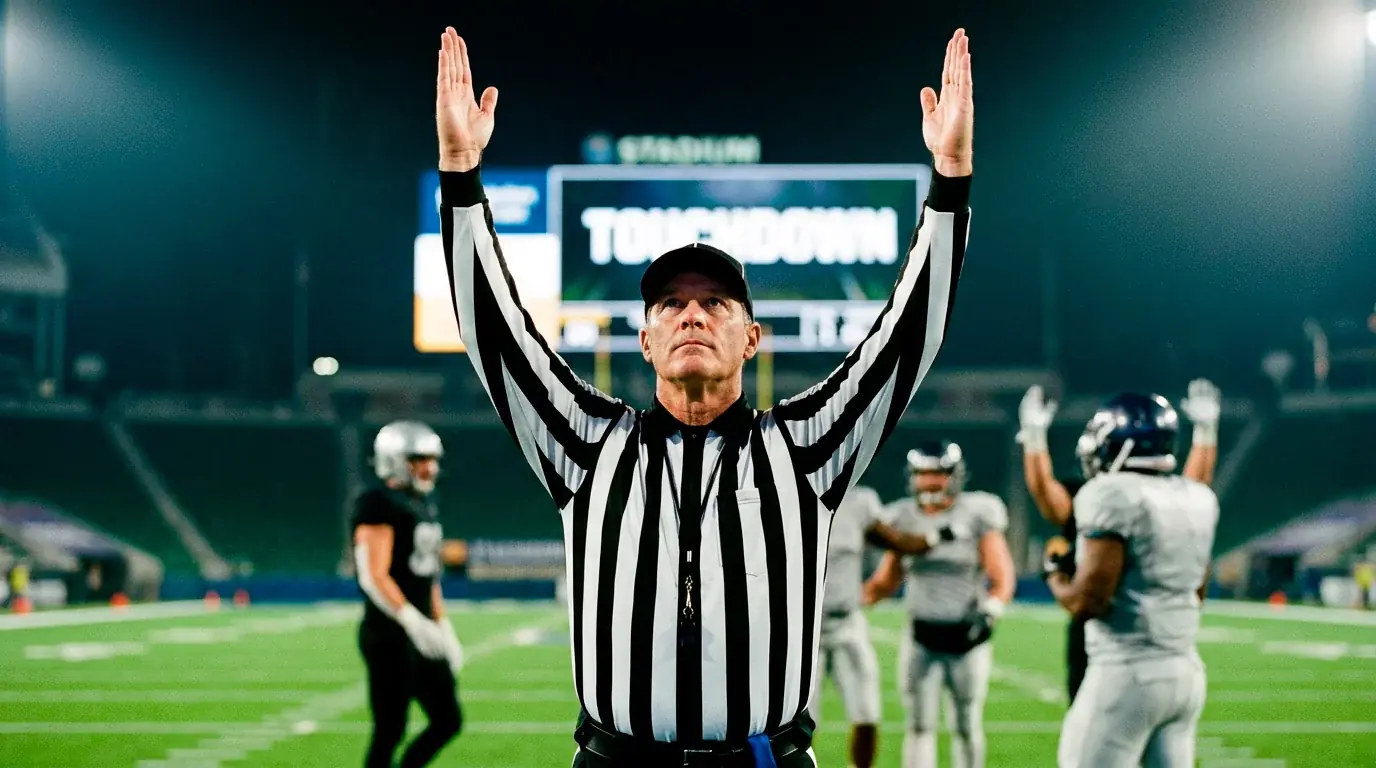
Sportsbook Settlement Rules: Handling Voids and Reversals
I lost a winning bet in 2022 because I did not read the settlement terms. A touchdown that appeared to stand on the broadcast was reversed by a stat correction the following day, and my sportsbook re-graded the prop as a loss twelve hours after I had already celebrated the win. The amount was modest — one unit — but the lesson was expensive in a different way: it cost me the assumption that all settlement works the same way everywhere.
Across 272 regular-season games in the 2021-22 NFL season, only two finished without any touchdowns — a 0.735% occurrence. So the vast majority of TD props will produce a clear result. But the edge cases — replay reversals, stat corrections, voided games, player ejections — create the settlement disputes that actually matter to your bankroll. And those edge cases are handled differently depending on which sportsbook you use.
Official NFL Statistics as the Settlement Source
The standard across the UK sportsbook market is to settle TD props based on official NFL statistics. These stats are compiled by the league’s official data partner and published after each game, with a correction window that extends into the following day.
The distinction between official stats and broadcast stats matters more than most bettors realise. The broadcast stat feed — what you see updating in real time on your television screen — is compiled by a separate team and occasionally diverges from the official record. A touchdown that the broadcast credits to one player may be officially reassigned to another after review. A fumble recovery touchdown might be initially credited to the wrong defender. These discrepancies are rare but not negligible — across a full season of tracking, I encounter one or two per month that affect a prop bet result.
The practical implication: do not assume your TD prop result is final until the sportsbook officially grades it. Most UK operators publish grading within two to four hours of a game ending, but some wait for the official stat release, which can take up to eighteen hours. If you see a pending bet that you believe should have been graded as a winner, check the official NFL game log before contacting customer support.
Edge Cases: Replay Reversals, Voided Games, and Player Ejections
Replay reversals are the most common edge case in TD prop settlement. When a player appears to score, the play is reviewed, and the touchdown is overturned, the prop is graded as if the touchdown never happened. This applies regardless of how the on-field call was initially made — if the official final statistics show no touchdown, the prop loses.
The NFL issued a memo to all 32 clubs in November 2025 addressing integrity concerns around prop betting, which included discussion of how official stat compilation interacts with prop bet settlement. The memo reinforced that the league’s official statistics are the definitive record, and any prop bet grading should follow the official game book. For UK punters, this means the settlement process has a clear upstream authority — the NFL itself — which reduces but does not eliminate operator-level variation.
Voided games — those cancelled, postponed, or abandoned before reaching a minimum duration — trigger different rules across operators. The most common standard is that TD props are voided and stakes returned if the game does not complete the first half (thirty minutes of game clock). Some operators use a higher threshold of fifty-five minutes. In the modern NFL, game abandonment is extraordinarily rare, but weather delays and safety incidents have caused postponements that briefly put prop settlement in question.
Player ejections create a harsh reality for TD prop bettors. If a player is ejected in the first quarter without scoring, his anytime TD prop loses. There is no void or refund for non-completion of the game by an individual player — the bet is live from the player’s first snap, and ejection is treated the same as any other reason the player failed to score. The same applies to injuries that remove a player from the game. Once a player takes the field, the bet is active, and his failure to score for any reason constitutes a loss.
Stat corrections after initial grading are the edge case that catches the most bettors off guard. If a touchdown is reassigned during the official review process — for example, a lateral play where the scorer is initially misidentified — the prop bet result may change. Most UK sportsbooks reserve the right to re-grade bets based on official stat corrections for up to forty-eight hours after the game. Some specify a shorter window of twenty-four hours. After the correction window closes, the initial grading stands regardless of subsequent stat changes.
How UK Sportsbook T&Cs Differ on TD Prop Settlement
I maintain a reference sheet comparing TD prop settlement terms across my primary sportsbooks. The differences are narrow but real, and they occasionally determine whether a borderline result pays or does not.
The three areas of meaningful variation are overtime inclusion, minimum game duration for props to stand, and the stat correction window. On overtime, the UK market is nearly unanimous: overtime counts for anytime TD settlement. I have encountered exactly one operator that excluded overtime touchdowns from standard anytime TD settlement, and that exclusion was buried deep enough in their terms that most bettors would never notice it.
Minimum game duration varies between “first half completed” and “fifty-five minutes completed.” The distinction matters only in the unlikely event of an abandoned game, but when it does matter, the difference between thirty minutes and fifty-five minutes of game clock could determine whether your winning TD prop in the first quarter is settled or voided.
The stat correction window is the most practically significant variation. Operators with a forty-eight-hour window give the NFL’s official statisticians ample time to make corrections, which means your bet result is more likely to reflect the final official record. Operators with a twenty-four-hour window may grade your bet before all corrections are processed, which could work for or against you depending on the specific correction.
My advice: spend fifteen minutes reading the TD prop settlement section of your sportsbook’s terms before the NFL season starts. Look specifically for the clauses covering overtime, game abandonment, stat corrections, and player withdrawal. Note any language that differs from what you assume to be standard, and factor those differences into your sportsbook selection. The best odds in the market are worth less if the settlement terms work against you on edge cases, and understanding settlement is a natural extension of understanding the fundamental rules of what counts as a touchdown in prop bet grading.
What official source do sportsbooks use to settle NFL TD prop bets?
The standard is to use the official NFL game statistics compiled by the league’s designated data partner. These statistics are published after each game and may be corrected within a window of 24 to 48 hours depending on the sportsbook’s terms. The official game log, not the broadcast stat feed, is the definitive record for settlement purposes.
How long after a game do UK sportsbooks grade TD prop results?
Most UK sportsbooks grade TD prop results within two to four hours of a game ending. However, some operators wait for the official NFL stat release, which can take up to eighteen hours. If a stat correction occurs during the operator’s correction window — typically 24 to 48 hours — the bet may be re-graded to reflect the updated official record.
Created by the ”nfl td Prop Bets” editorial team.